- Welcome to AHXproject.
AHXproject
< | >
Recent posts
#81
Ubuntu News / Tuba, the best Mastodon clien...
Last post by tim - Aug 23, 2026, 02:19 PMTuba, the best Mastodon client for Linux, just got a BIG update
 Tuba 0.11 adds full Mastodon quote and Collections support, UnifiedPush and an early, experimental Android build. Linux's best Mastodon app, now better!
You're reading Tuba, the best Mastodon client for Linux, just got a BIG update , a blog post from OMG! Ubuntu . Do not reproduce elsewhere without permission.
Categories: News, App Updates, social media, Tuba
Source: https://www.omgubuntu.co.uk/2026/08/tuba-mastodon-quote-support-collections Aug 20, 2026, 05:04 AM
Tuba 0.11 adds full Mastodon quote and Collections support, UnifiedPush and an early, experimental Android build. Linux's best Mastodon app, now better!You're reading Tuba, the best Mastodon client for Linux, just got a BIG update , a blog post from OMG! Ubuntu . Do not reproduce elsewhere without permission.
Categories: News, App Updates, social media, Tuba
Source: https://www.omgubuntu.co.uk/2026/08/tuba-mastodon-quote-support-collections Aug 20, 2026, 05:04 AM
#82
Ubuntu News / Pine64 stops making Linux dev...
Last post by tim - Aug 23, 2026, 02:19 PMPine64 stops making Linux devices as AI inflates component costs
 If you've been eyeing up one of PINE64's Linux-friendly single-board computers, phones or tablets, now would be a good time to buy one. The open-hardware company has announced it will not be "producing more Linux devices" for the time being, and expects its existing stock of certain devices, including the PineNote and PineTab 2, to sell out in the next three months. After that, there won't be more until. Why's the company pulling the plug on production? One guess: RAMaggeddon. The AI infrastructure boom continues apace, and demand for memory and storage chips has reduced supply and driven up costs [...]
You're reading Pine64 stops making Linux devices as AI inflates component costs , a blog post from OMG! Ubuntu . Do not reproduce elsewhere without permission.
Categories: Hardware, News, AI/ML, pine64
Source: https://www.omgubuntu.co.uk/2026/08/pine64-stops-linux-device-production-chip-shortage Aug 19, 2026, 06:49 PM
If you've been eyeing up one of PINE64's Linux-friendly single-board computers, phones or tablets, now would be a good time to buy one. The open-hardware company has announced it will not be "producing more Linux devices" for the time being, and expects its existing stock of certain devices, including the PineNote and PineTab 2, to sell out in the next three months. After that, there won't be more until. Why's the company pulling the plug on production? One guess: RAMaggeddon. The AI infrastructure boom continues apace, and demand for memory and storage chips has reduced supply and driven up costs [...]You're reading Pine64 stops making Linux devices as AI inflates component costs , a blog post from OMG! Ubuntu . Do not reproduce elsewhere without permission.
Categories: Hardware, News, AI/ML, pine64
Source: https://www.omgubuntu.co.uk/2026/08/pine64-stops-linux-device-production-chip-shortage Aug 19, 2026, 06:49 PM
#83
Ubuntu News / Firefox 154 released with tra...
Last post by tim - Aug 23, 2026, 02:19 PMFirefox 154 released with translation, AI and UI tweaks
 Mozilla has released Firefox 154 with some small AI-related changes, an 'improved' full-page translations and faster video seeking on "all operating systems". Firefox 154 serves as the final monthly release of Firefox before browser switches to a faster, twice-monthly release schedule early September. That means you'll be back here, reading "Firefox 155 released" in a couple weeks, rather than the usual four weeks. But enough what's coming; what's new now? Firefox 154's main changes Firefox's been expanding its range of address bar actions in recent releases. We got tab muting action in v152 and an colour picker in v153. Firefox [...]
You're reading Firefox 154 released with translation, AI and UI tweaks , a blog post from OMG! Ubuntu . Do not reproduce elsewhere without permission.
Categories: News, AI/ML, App Updates, Firefox
Source: https://www.omgubuntu.co.uk/2026/08/firefox-154-released Aug 18, 2026, 04:46 PM
Mozilla has released Firefox 154 with some small AI-related changes, an 'improved' full-page translations and faster video seeking on "all operating systems". Firefox 154 serves as the final monthly release of Firefox before browser switches to a faster, twice-monthly release schedule early September. That means you'll be back here, reading "Firefox 155 released" in a couple weeks, rather than the usual four weeks. But enough what's coming; what's new now? Firefox 154's main changes Firefox's been expanding its range of address bar actions in recent releases. We got tab muting action in v152 and an colour picker in v153. Firefox [...]You're reading Firefox 154 released with translation, AI and UI tweaks , a blog post from OMG! Ubuntu . Do not reproduce elsewhere without permission.
Categories: News, AI/ML, App Updates, Firefox
Source: https://www.omgubuntu.co.uk/2026/08/firefox-154-released Aug 18, 2026, 04:46 PM
#84
Ubuntu News / Ubuntu’s App Center doesn’t k...
Last post by tim - Aug 23, 2026, 02:19 PMUbuntu's App Center doesn't know what went wrong
 I recently re-encountered my favourite 'error' dialog in Ubuntu, which is thrown by the distro's App Center (snap-store), which is the default GUI software management tool. Now, I don't see it often, but when I do it (un)helpfully informs me: "Something went wrong. We're sorry, but we're not sure what the error is." I appreciate its honesty and sympathise with the general sense of unease it imparts – I say something similar myself, looking at the state of the world – but surely it's the software's job to know what's wrong – or at least pretend it does! Here's the [...]
You're reading Ubuntu's App Center doesn't know what went wrong , a blog post from OMG! Ubuntu . Do not reproduce elsewhere without permission.
Categories: News, App Center, bugs, Snaps
Source: https://www.omgubuntu.co.uk/2026/08/ubuntu-app-center-something-went-wrong Aug 18, 2026, 03:32 AM
I recently re-encountered my favourite 'error' dialog in Ubuntu, which is thrown by the distro's App Center (snap-store), which is the default GUI software management tool. Now, I don't see it often, but when I do it (un)helpfully informs me: "Something went wrong. We're sorry, but we're not sure what the error is." I appreciate its honesty and sympathise with the general sense of unease it imparts – I say something similar myself, looking at the state of the world – but surely it's the software's job to know what's wrong – or at least pretend it does! Here's the [...]You're reading Ubuntu's App Center doesn't know what went wrong , a blog post from OMG! Ubuntu . Do not reproduce elsewhere without permission.
Categories: News, App Center, bugs, Snaps
Source: https://www.omgubuntu.co.uk/2026/08/ubuntu-app-center-something-went-wrong Aug 18, 2026, 03:32 AM
#85
Ubuntu News / Wordbook is a modern offline ...
Last post by tim - Aug 23, 2026, 02:19 PMWordbook is a modern offline dictionary for GNOME
 They say never judge a book by its cover, and few do if said book is a dictionary, but what about desktop dictionary apps? I recently came across Wordbook, a modern English-English dictionary powered by OpenEnglish WordNet and eSpeak for pronunciations. Wordbook is in GNOME Circle, and its GTK4/libadwaita UI is a good fit for the desktop. Wordbook uses a lexical database, with words grouped into 'synsets' based on their meaning. It makes it easier to explore related words, distinguish between words that look similar (but have different meanings) and find different precise alternatives. A random word option, favourites and [...]
You're reading Wordbook is a modern offline dictionary for GNOME , a blog post from OMG! Ubuntu . Do not reproduce elsewhere without permission.
Categories: News, dictionary, Offline Apps, WordBook
Source: https://www.omgubuntu.co.uk/2026/08/gnome-wordbook-dictionary-offline Aug 18, 2026, 01:30 AM
They say never judge a book by its cover, and few do if said book is a dictionary, but what about desktop dictionary apps? I recently came across Wordbook, a modern English-English dictionary powered by OpenEnglish WordNet and eSpeak for pronunciations. Wordbook is in GNOME Circle, and its GTK4/libadwaita UI is a good fit for the desktop. Wordbook uses a lexical database, with words grouped into 'synsets' based on their meaning. It makes it easier to explore related words, distinguish between words that look similar (but have different meanings) and find different precise alternatives. A random word option, favourites and [...]You're reading Wordbook is a modern offline dictionary for GNOME , a blog post from OMG! Ubuntu . Do not reproduce elsewhere without permission.
Categories: News, dictionary, Offline Apps, WordBook
Source: https://www.omgubuntu.co.uk/2026/08/gnome-wordbook-dictionary-offline Aug 18, 2026, 01:30 AM
#86
Ubuntu News / Linux 7.2 brings cache-aware ...
Last post by tim - Aug 17, 2026, 05:35 PMLinux 7.2 brings cache-aware scheduling, faster ext4 and Btrfs
 Linux kernel 7.2 has been released, adding cache-aware scheduling, ext4 filesystem performance boosts and a slew of new and improved hardware drivers for laptops and peripherals. A merge widow record was also set during the 9-week development cycle, with more than 2,100 individual contributors involved. AI, obviously, has helped. Commit-crunching by LWN found roughly 5% of commits in 7.2 have an 'assisted-by' tag, indicating AI usage. Not that the latest kernel update was all additions. More than 13,000 lines of code for legacy i486 CPU emulation were removed from Linux 7.2, as was a 40-year-old Hercules graphics card driver, AppleTalk [...]
You're reading Linux 7.2 brings cache-aware scheduling, faster ext4 and Btrfs , a blog post from OMG! Ubuntu . Do not reproduce elsewhere without permission.
Categories: News, ext4, linux kernel, mediatek, RealTek
Source: https://www.omgubuntu.co.uk/2026/08/linux-7-2-cache-aware-scheduling-ext4-btrfs Aug 17, 2026, 02:04 AM
Linux kernel 7.2 has been released, adding cache-aware scheduling, ext4 filesystem performance boosts and a slew of new and improved hardware drivers for laptops and peripherals. A merge widow record was also set during the 9-week development cycle, with more than 2,100 individual contributors involved. AI, obviously, has helped. Commit-crunching by LWN found roughly 5% of commits in 7.2 have an 'assisted-by' tag, indicating AI usage. Not that the latest kernel update was all additions. More than 13,000 lines of code for legacy i486 CPU emulation were removed from Linux 7.2, as was a 40-year-old Hercules graphics card driver, AppleTalk [...]You're reading Linux 7.2 brings cache-aware scheduling, faster ext4 and Btrfs , a blog post from OMG! Ubuntu . Do not reproduce elsewhere without permission.
Categories: News, ext4, linux kernel, mediatek, RealTek
Source: https://www.omgubuntu.co.uk/2026/08/linux-7-2-cache-aware-scheduling-ext4-btrfs Aug 17, 2026, 02:04 AM
#87
Ubuntu News / Add multiple picture widgets ...
Last post by tim - Aug 17, 2026, 05:35 PMAdd multiple picture widgets to your Ubuntu desktop
 If you remember that desktop picture widget for GNOME I wrote about last year, but found it a bit too basic for your personalisation preferences, you weren't alone. Another user felt it could lacked enough flexibility, so forked and improved it. Picture Desktop Widget Remake improves on the original. It lets add multiple picture widgets to your Ubuntu desktop, and assign each one a different folder to pull images from, at random. Plus, you can set the size, position, border radius and aspect ratio of each widget individually. Each photo frame has its own on/off button in Preferences, so you [...]
You're reading Add multiple picture widgets to your Ubuntu desktop , a blog post from OMG! Ubuntu . Do not reproduce elsewhere without permission.
Categories: News, Eye Candy, GNOME Extensions, widgets
Source: https://www.omgubuntu.co.uk/2026/08/desktop-picture-frame-widget-ubuntu Aug 14, 2026, 07:02 PM
If you remember that desktop picture widget for GNOME I wrote about last year, but found it a bit too basic for your personalisation preferences, you weren't alone. Another user felt it could lacked enough flexibility, so forked and improved it. Picture Desktop Widget Remake improves on the original. It lets add multiple picture widgets to your Ubuntu desktop, and assign each one a different folder to pull images from, at random. Plus, you can set the size, position, border radius and aspect ratio of each widget individually. Each photo frame has its own on/off button in Preferences, so you [...]You're reading Add multiple picture widgets to your Ubuntu desktop , a blog post from OMG! Ubuntu . Do not reproduce elsewhere without permission.
Categories: News, Eye Candy, GNOME Extensions, widgets
Source: https://www.omgubuntu.co.uk/2026/08/desktop-picture-frame-widget-ubuntu Aug 14, 2026, 07:02 PM
#88
Ubuntu News / GeForce NOW’s Linux app exits...
Last post by tim - Aug 17, 2026, 05:35 PMGeForce NOW's Linux app exits beta, gets official Flatpak repo
 GeForce NOW's native Linux app has exited beta after seven months of testing, with official support for Ubuntu 24.04 LTS and later. The app is a frontend for Nvidia's game streaming service, with more than 4,500 PC titles running in the cloud on Nvidia servers. Users get GeForce RTX-class performance, ray tracing and DLSS without the need to own the relevant hardware. In a blog post to announce its 'graduation' from beta, Nvidia say GeForce NOW for Linux has picked up "performance, stability and polish" improvements thanks to community feedback during the beta test period. The company also touches on [...]
You're reading GeForce NOW's Linux app exits beta, gets official Flatpak repo , a blog post from OMG! Ubuntu . Do not reproduce elsewhere without permission.
Categories: News, App Updates, GeForce Now, linux gaming, NVIDIA
Source: https://www.omgubuntu.co.uk/2026/08/nvidia-geforce-now-linux-stable Aug 13, 2026, 06:22 PM
GeForce NOW's native Linux app has exited beta after seven months of testing, with official support for Ubuntu 24.04 LTS and later. The app is a frontend for Nvidia's game streaming service, with more than 4,500 PC titles running in the cloud on Nvidia servers. Users get GeForce RTX-class performance, ray tracing and DLSS without the need to own the relevant hardware. In a blog post to announce its 'graduation' from beta, Nvidia say GeForce NOW for Linux has picked up "performance, stability and polish" improvements thanks to community feedback during the beta test period. The company also touches on [...]You're reading GeForce NOW's Linux app exits beta, gets official Flatpak repo , a blog post from OMG! Ubuntu . Do not reproduce elsewhere without permission.
Categories: News, App Updates, GeForce Now, linux gaming, NVIDIA
Source: https://www.omgubuntu.co.uk/2026/08/nvidia-geforce-now-linux-stable Aug 13, 2026, 06:22 PM
#89
Ubuntu Blog / Advantech AOM-2721 is now Ubu...
Last post by tim - Aug 13, 2026, 04:13 PMAdvantech AOM-2721 is now Ubuntu Certified
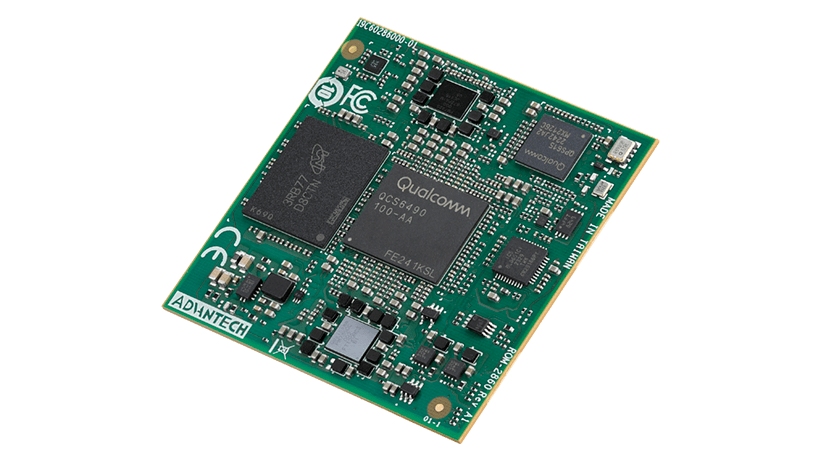
Canonical announces that the Advantech AOM-2721 is officially joining the list of Ubuntu Certified Hardware . This latest certification highlights the deepening collaboration between Canonical and Advantech.
With full certification for Ubuntu 24.04 LTS, developers utilizing Advantech's powerful Open Standard Module (OSM) AOM-2721 can now deploy a seamless, securely designed, and highly optimized Ubuntu experience right out of the box.
Tiny size, massive edge power
The Advantech AOM-2721 is a highly compact Size-L OSM. Measuring just 45 x 45 mm, this miniature solder-on module is designed to outpace traditional computer-on-modules. At its core lies the Qualcomm® Octa-core QCS6490 processor operating with a 6.9-watt TDP.
This architecture allows the AOM-2721 to deliver robust on-site computing. In fact, according to Advantech , the QCS6490 achieves nearly 20% better performance compared to mid-tier x86 processors, while providing an impressive 43-75% reduction in power consumption. This makes it an unparalleled solution tailored to meet the demanding physical and thermal constraints of diverse AIoT scenarios and handheld applications.
Empowering machine vision with on-device AI
As industries push intelligence closer to the edge, the AOM-2721 is perfectly equipped to handle intensive workloads. The module features 12 TOPS of AI capability, alongside support for dual-camera inputs and a native video codec.
This combination excels in applications requiring low-latency signals, seamless video capture, and resilience to vibrations within limited installation spaces. It is especially well-suited for autonomous mobile robots (AMR). By leveraging on-device AI, these AMRs can process data from cameras, radar, and LiDAR to perform complex tasks such as object detection, localization, route optimization, and collision avoidance. Furthermore, developers can utilize the Qualcomm AI Hub to streamline the deployment of machine learning models.
Abundant interfaces and seamless connectivity
To fully integrate into modern AIoT ecosystems, the AOM-2721 offers a vast array of I/O options within its compact form factor. Key connectivity features include:
When paired with Qualcomm's 5G and Wi-Fi 6 modules, the integration of the Octa-core QCS6490 CPU ensures compatibility and minimal latency.
Ubuntu optimized for Qualcomm silicon
Just as we expanded support with the Ubuntu general availability for Qualcomm Dragonwing, certifying the Advantech AOM-2721 ensures that developers can build, deploy, and scale their AIoT projects with confidence. Ubuntu certification means this device has passed rigorous testing to guarantee hardware components function flawlessly on Ubuntu 24.04 LTS at the time of certification and in the future. The Ubuntu Certification team performs regression testing on certified hardware on a regular cadence to ensure Ubuntu Stable Release Updates (SRU) are validated on certified hardware.
Customers deploying the AOM-2721 with Ubuntu will benefit from Canonical's robust security patching, long-term support (LTS), and a vast ecosystem of open-source tools.
Maximizing enterprise value with Ubuntu Pro for Devices
For commercial deployments requiring long-term reliability and compliance, companies can enhance their Ubuntu-powered fleet with an Ubuntu Pro for Devices subscription. This enterprise-grade service offers critical benefits for embedded and IoT deployments:
Whether you are building the next generation of autonomous robots or deploying smart industrial machine vision systems, the Advantech AOM-2721 powered by Ubuntu 24.04 LTS and Ubuntu Pro for Devices subscription provides the securely designed, optimized foundation you need to get to market faster.
Learn more
Explore our hardware ecosystems on the Ubuntu Certified Hardware Blog .
For more information about AOM-2721 contact your local Advantech sales representative or visit the Advantech official website .
Canonical announces that the Advantech AOM-2721 is officially joining the list of Ubuntu Certified Hardware.
Categories: Advantech, Certified hardware, Edge AI, IoT, Ubuntu Pro for Devices
Source: https://ubuntu.com//blog/advantech-aom-2721-ubuntu-certified Aug 13, 2026, 01:25 PM
Canonical announces that the Advantech AOM-2721 is officially joining the list of Ubuntu Certified Hardware . This latest certification highlights the deepening collaboration between Canonical and Advantech.
With full certification for Ubuntu 24.04 LTS, developers utilizing Advantech's powerful Open Standard Module (OSM) AOM-2721 can now deploy a seamless, securely designed, and highly optimized Ubuntu experience right out of the box.
Tiny size, massive edge power
The Advantech AOM-2721 is a highly compact Size-L OSM. Measuring just 45 x 45 mm, this miniature solder-on module is designed to outpace traditional computer-on-modules. At its core lies the Qualcomm® Octa-core QCS6490 processor operating with a 6.9-watt TDP.
This architecture allows the AOM-2721 to deliver robust on-site computing. In fact, according to Advantech , the QCS6490 achieves nearly 20% better performance compared to mid-tier x86 processors, while providing an impressive 43-75% reduction in power consumption. This makes it an unparalleled solution tailored to meet the demanding physical and thermal constraints of diverse AIoT scenarios and handheld applications.
Empowering machine vision with on-device AI
As industries push intelligence closer to the edge, the AOM-2721 is perfectly equipped to handle intensive workloads. The module features 12 TOPS of AI capability, alongside support for dual-camera inputs and a native video codec.
This combination excels in applications requiring low-latency signals, seamless video capture, and resilience to vibrations within limited installation spaces. It is especially well-suited for autonomous mobile robots (AMR). By leveraging on-device AI, these AMRs can process data from cameras, radar, and LiDAR to perform complex tasks such as object detection, localization, route optimization, and collision avoidance. Furthermore, developers can utilize the Qualcomm AI Hub to streamline the deployment of machine learning models.
Abundant interfaces and seamless connectivity
To fully integrate into modern AIoT ecosystems, the AOM-2721 offers a vast array of I/O options within its compact form factor. Key connectivity features include:
- High-speed expansion: PCIe Gen3 support for 5G and Wi-Fi 6 connectivity.
- Next-gen storage: High-speed memory and storage interfaces including LPDDR5 and UFS.
- Versatile I/O: Flexible connectivity via USB 3.2, UART, and GPIO.
- Rich displays: Dual-display capability supporting up to 2K resolution across DSI, DP, and eDP interfaces.
When paired with Qualcomm's 5G and Wi-Fi 6 modules, the integration of the Octa-core QCS6490 CPU ensures compatibility and minimal latency.
Ubuntu optimized for Qualcomm silicon
Just as we expanded support with the Ubuntu general availability for Qualcomm Dragonwing, certifying the Advantech AOM-2721 ensures that developers can build, deploy, and scale their AIoT projects with confidence. Ubuntu certification means this device has passed rigorous testing to guarantee hardware components function flawlessly on Ubuntu 24.04 LTS at the time of certification and in the future. The Ubuntu Certification team performs regression testing on certified hardware on a regular cadence to ensure Ubuntu Stable Release Updates (SRU) are validated on certified hardware.
Customers deploying the AOM-2721 with Ubuntu will benefit from Canonical's robust security patching, long-term support (LTS), and a vast ecosystem of open-source tools.
Maximizing enterprise value with Ubuntu Pro for Devices
For commercial deployments requiring long-term reliability and compliance, companies can enhance their Ubuntu-powered fleet with an Ubuntu Pro for Devices subscription. This enterprise-grade service offers critical benefits for embedded and IoT deployments:
- CVE Protection: Prompt security patches for critical and high-severity vulnerabilities for up to 15 years, minimizing exposure to security threats at the edge.
- Device Management Solutions: Reduced cost of managing device fleets and proactive management of security for IoT devices.
- Compliance and Hardening: Access to tools for automated security hardening and compliance profiles, such as CIS benchmarks and FIPS-compliant cryptographic modules.
Whether you are building the next generation of autonomous robots or deploying smart industrial machine vision systems, the Advantech AOM-2721 powered by Ubuntu 24.04 LTS and Ubuntu Pro for Devices subscription provides the securely designed, optimized foundation you need to get to market faster.
Learn more
Explore our hardware ecosystems on the Ubuntu Certified Hardware Blog .
For more information about AOM-2721 contact your local Advantech sales representative or visit the Advantech official website .
Canonical announces that the Advantech AOM-2721 is officially joining the list of Ubuntu Certified Hardware.
Categories: Advantech, Certified hardware, Edge AI, IoT, Ubuntu Pro for Devices
Source: https://ubuntu.com//blog/advantech-aom-2721-ubuntu-certified Aug 13, 2026, 01:25 PM
#90
Ubuntu Blog / Canonical integrates NVIDIA N...
Last post by tim - Aug 13, 2026, 04:13 PMCanonical integrates NVIDIA Nemotron 3.5 Lightning with Ubuntu for always-on AI agents
Canonical is pleased to announce that NVIDIA's newly introduced NVIDIA Nemotron 3.5 Lightning, an open, customizable model built for always-on AI agents, is now available on Ubuntu with single-command installation.
NVIDIA Nemotron 3.5 Lightning is an open 30B hybrid Mixture-of-Experts (MoE) model with 3B active parameters, designed for high-throughput agentic workloads. It is fully customizable, allowing organizations to own, fine-tune, and deploy the model wherever their agents operate while maintaining control over model behavior, data handling, and deployment.
Nemotron 3.5 Lightning available on Ubuntu at launch
Canonical is enabling access to Nemotron 3.5 Lightning at launch through inference snaps : pre-packaged AI inference runtimes distributed as snap packages for consistent deployment across systems. Developers and enterprises can deploy the model across supported NVIDIA platforms with a single command:
sudo snap install nemotron-3-5-lightning
Inference snaps transform Nemotron 3.5 Lightning deployment into a simple, standardized operation. This production-ready runtime scales consistently across workstations, edge devices, and servers, allowing teams to focus on building AI agents instead of managing infrastructure. Users deploying Nemotron 3.5 Lightning with inference snaps benefit from:
For enterprises, this translates into significantly faster deployment times, saving weeks of integration and validation work, and enabling scalable AI infrastructure with a single portable artifact.
Learn more at: https://documentation.ubuntu.com/inference-snaps/
Canonical is pleased to announce that NVIDIA's newly introduced NVIDIA Nemotron 3.5 Lightning, an open, customizable model built for always-on AI agents, is now available on Ubuntu with single-command installation. NVIDIA Nemotron 3.5 Lightning is an open 30B hybrid Mixture-of-Experts (MoE) model with 3B active parameters, designed for high-throughput agentic workloads. It is fully customizable, [...]
Source: https://ubuntu.com//blog/nvidia-nemotron-3-5-lightning Aug 11, 2026, 04:00 PM
Canonical is pleased to announce that NVIDIA's newly introduced NVIDIA Nemotron 3.5 Lightning, an open, customizable model built for always-on AI agents, is now available on Ubuntu with single-command installation.
NVIDIA Nemotron 3.5 Lightning is an open 30B hybrid Mixture-of-Experts (MoE) model with 3B active parameters, designed for high-throughput agentic workloads. It is fully customizable, allowing organizations to own, fine-tune, and deploy the model wherever their agents operate while maintaining control over model behavior, data handling, and deployment.
Nemotron 3.5 Lightning available on Ubuntu at launch
Canonical is enabling access to Nemotron 3.5 Lightning at launch through inference snaps : pre-packaged AI inference runtimes distributed as snap packages for consistent deployment across systems. Developers and enterprises can deploy the model across supported NVIDIA platforms with a single command:
sudo snap install nemotron-3-5-lightning
Inference snaps transform Nemotron 3.5 Lightning deployment into a simple, standardized operation. This production-ready runtime scales consistently across workstations, edge devices, and servers, allowing teams to focus on building AI agents instead of managing infrastructure. Users deploying Nemotron 3.5 Lightning with inference snaps benefit from:
- 1 million token context window: Nemotron's context windows supports persistent, autonomous AI agents capable of maintaining context across long-running, multi-step workflows.
- High-throughput hybrid MoE architecture: Nemotron 3.5 Lightning features a 30B Mixture-of-Experts model with 3B active parameters, distilled from NVIDIA's frontier Nemotron 3 Ultra.
- Consistent runtime across environments: inference snaps ensure identical behavior on cloud, on-premises, and edge systems
- Simplified operations: standardized snap packaging reduces maintenance, patching, and upgrade complexity.
- Secure, confined execution: strict isolation with automatic updates and verified distribution
For enterprises, this translates into significantly faster deployment times, saving weeks of integration and validation work, and enabling scalable AI infrastructure with a single portable artifact.
Learn more at: https://documentation.ubuntu.com/inference-snaps/
Canonical is pleased to announce that NVIDIA's newly introduced NVIDIA Nemotron 3.5 Lightning, an open, customizable model built for always-on AI agents, is now available on Ubuntu with single-command installation. NVIDIA Nemotron 3.5 Lightning is an open 30B hybrid Mixture-of-Experts (MoE) model with 3B active parameters, designed for high-throughput agentic workloads. It is fully customizable, [...]
Source: https://ubuntu.com//blog/nvidia-nemotron-3-5-lightning Aug 11, 2026, 04:00 PM